

- Meta healthcare advertising sits inside three structural requirements: LegitScript certification where applicable, the Health and Wellness creative rules (no negative self-perception, no before/after for restricted categories), and server-side Conversions API attribution.
- The single biggest source of Meta disapproval is creative that combines second-person condition framing (your symptoms, do you struggle) with negative self-perception imagery; rewrite to service-led, brand-authority voice and most ads clear.
- Each Meta surface has its own creative review: Feed primary text, Stories and Reels with on-screen text overlays scanned the same as primary text, image creative reviewed against before/after and distress-framing rules.
- CAPI is table stakes for healthcare paid social in 2026, not an optimization layer; programs still running browser Meta Pixel on patient-facing pages accumulate both HIPAA exposure and measurement debt as Meta's downstream signal restrictions tighten.
- Since January 2025, Meta operates a tiered data-restriction system (Core, Mid-Restricted, Full-Restricted) and prohibits custom audiences and lookalikes built on sensitive-health behavior.
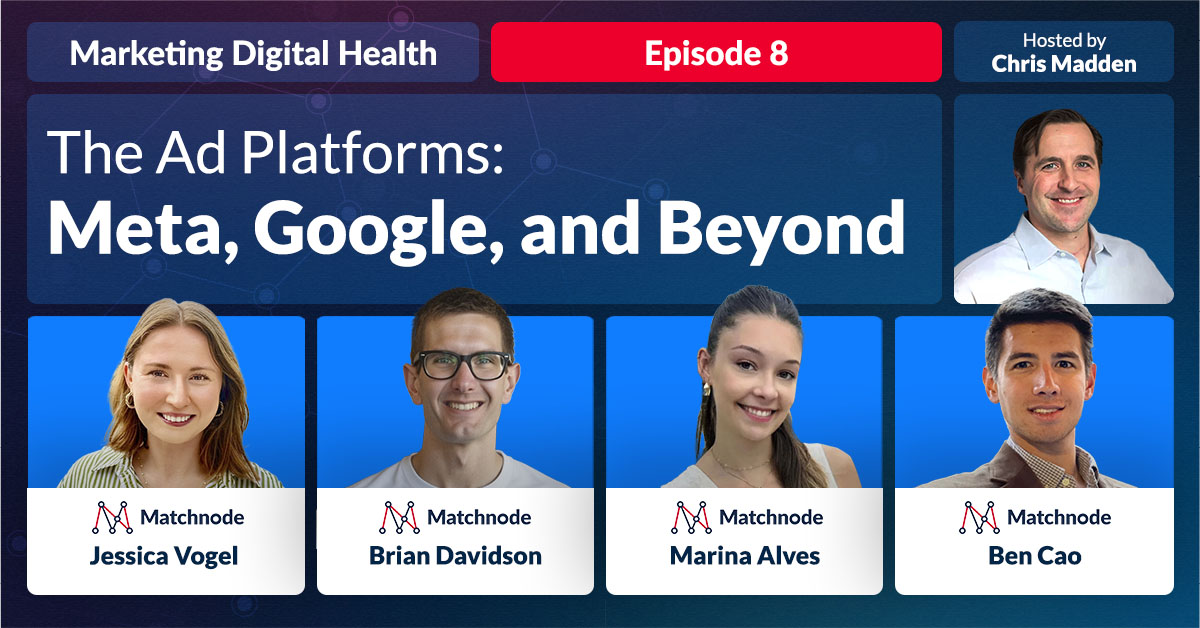
- For the cross-channel framework see Google Ads and Microsoft health advertising policies; for the Google-side compliant-creative companion see how to build compliant Google healthcare ads; for the legal context see pixels, HIPAA, and the HHS. Audio companion: The Ad Platforms: Meta, Google, and Beyond on the Marketing Digital Health podcast.
8 min read · Pillar: Digital Health Performance Marketing
Meta is the highest-volume paid social channel for digital health brands and the platform with the sharpest enforcement posture. Since early 2025, Facebook and Instagram have tightened the data, targeting, and creative rules that govern healthcare advertisers in ways that materially change which campaigns are buildable and how their measurement infrastructure has to be wired. A program that ran clean on Meta in 2023 is unlikely to clear review the same way today without rework.
This guide covers what Meta actually requires from a healthcare advertiser, the creative and audience rules that drive most disapprovals, the Conversions API pathway that replaces the legacy browser Pixel on patient-facing pages, and the operational discipline needed to keep a compliant program running. It does not re-explain the broader certification ecosystem (covered in healthcare marketing certifications that actually matter) or the cross-platform policy framework (Google Ads and Microsoft health advertising policies). The Google counterpart to this post is how to build compliant Google healthcare ads.
With US healthcare and pharma digital ad spend projected at $26 billion in 2026, paid social on Meta remains a defensible channel for the brands that solve the compliance equation, and a liability for the brands that do not.

Meta’s data-restriction system for healthcare advertisers: Core, Mid-Restricted, Full-Restricted
Meta’s broad healthcare privacy and targeting tightening took effect, reshaping audience and conversion options
Conversions API, the server-side pathway that replaces the legacy browser Pixel on patient-facing pages
sensitive-health audiences Meta will let you build from custom conversions or lookalikes based on health behavior
What Meta requires from healthcare advertisers
Meta classifies healthcare advertising under its Health and Wellness policy category, with additional rules in adjacent categories for prescription drugs and pharmaceuticals, addiction services, and pharmaceutical manufacturers. Three structural requirements drive most of the platform-side compliance work.
- Certification, where applicable. Online pharmacies, telemedicine providers, and addiction-treatment services need LegitScript certification before serving ads. Since Q4 2025, Meta has extended LegitScript expectations to supplement and wellness brands making clinical-sounding claims. Without it, ad copy must stay in general wellness language only.
- Health and Wellness creative rules. Meta prohibits creative that generates negative self-perception to sell health, wellness, or cosmetic products. This is the single most actionable rule for creative teams to internalize, and the most common cause of new-account disapprovals.
- Data and targeting restrictions. Meta operates a tiered data-restriction system: Core Setup, Mid-Restricted Properties, and Full-Restricted Properties. Healthcare advertisers can land in any of the three tiers depending on the product category and how the advertiser configures conversion events. Custom audiences and lookalikes built on sensitive health behavior are prohibited.
Writing Meta ad copy and creative that passes review
Meta’s automated review applies most reliably to primary text, headlines, image content, and video voiceover transcripts. The classifier is calibrated specifically against the negative-self-perception pattern and the personalization patterns that imply Meta knows the viewer’s health condition. A surprising amount of the work is rewriting copy in third-person or brand-led voice from second-person condition framing.
Primary text and headlines that survive review
- Lead with the service, not the viewer’s symptom. “Same-week virtual therapy with licensed clinicians” passes; “Tired of waiting weeks for therapy?” combines personalization and negative self-perception in a single line.
- Avoid before/after framing in the copy. Even text-only references to a transformation (“From 220 to 175 in 6 months”) trigger Health and Wellness policy review and rarely clear.
- Use brand authority over fear-based urgency. “Founded by Johns Hopkins clinicians” works; “Don’t ignore your symptoms” triggers both the negative-self-perception flag and a separate personalization flag.
- Tie clinical claims to a source. “Studied with 90% retention at 12 months” is acceptable if the study exists and is linked from the landing page; unsourced outcome claims trigger manual review.
Image, Stories, and Reels creative
Meta’s image and short-form video review is calibrated to catch the same patterns that fail in text: before/after sequences, faces or body shots that imply the viewer’s condition, and outcome-number overlays without source documentation. Stories and Reels add the constraint that on-screen text overlays are scanned the same way primary text is, so the framing rules apply in a 9:16 vertical asset just as much as in a Feed image.
Creative patterns that get rejected
- Before/after weight loss, cosmetic, or mental-health imagery
- “Do you struggle with X?” headlines in primary text
- Faces showing visible distress paired with a treatment brand
- Body-part close-ups paired with a condition-specific service
- Reel voiceover claiming specific cures or guaranteed outcomes
Creative patterns that approve cleanly
- Branded environment shots: clinic interior, product UI, team
- Service-led headlines naming the offering, not the audience’s symptom
- Active healthy-lifestyle imagery without condition implication
- Clinician at work, with credentials cited in supporting copy
- Patient testimonial framing with “individual results may vary” disclaimer
Landing-page alignment
Meta evaluates the ad and the landing page as a single unit. An approved primary text pointing at a page that uses second-person condition framing, makes stronger claims, or fails the certification check will trigger retroactive disapproval, often without a clear notification. Landing pages should mirror the ad’s compliance posture: service-led language, named clinical authority, outcome claims linked to source data. Pages that pass this test also tend to convert better, because the implicit promise the ad makes is the one the page delivers.
The Conversions API requirement
The browser Meta Pixel on a patient-facing page is the single biggest source of HIPAA exposure in healthcare paid social. URLs visited, button clicks, and form interactions can carry condition signal that the Pixel forwards to Meta unfiltered. The compliant pattern routes conversion events server-side through Meta’s Conversions API with a BAA-covered customer data platform filtering protected health information before signals leave the brand’s infrastructure.
The technical architecture is non-trivial but well-documented at this point. CAPI is the table stakes for healthcare paid social in 2026, not an optimization layer. Programs still running on browser Pixel events alone are accumulating both compliance risk and measurement debt as Meta’s downstream signal restrictions tighten. The legal context for why this matters is in pixels, HIPAA, and the HHS; the regulatory inflection point that drove the shift is the AHA v. Becerra ruling reshaping the HHS-OCR enforcement posture in mid-2024.
CAPI is one half of the compliant architecture. The other half is a Customer Data Platform: a compliance and data-hygiene hub that sits between every source of the brand’s first-party data (website, app, intake forms, CRM, EHR-adjacent systems) and every destination it flows to (Meta, Google, TikTok, email, SMS, analytics, BI, data warehouse). The CDP enforces HIPAA and the growing patchwork of state-level health privacy rules (Washington’s My Health My Data Act, California, Colorado, Connecticut, Texas, Virginia, and more) on every event, while also keeping identifiers, consent flags, and event taxonomy clean across the whole graph.
Most teams stand up a CDP for defense, to avoid the breach or patient-privacy violation that becomes a public incident. The bigger payoff is offensive: more creative tests can ship, more campaigns can run, and more attribution events flow back cleanly because compliance and data hygiene are enforced once and centrally rather than relitigated in every campaign or rebuilt for every new destination. Matchnode works with Ours Privacy as the default CDP for digital health clients, and supports any compliant alternative a client’s team has already approved. The full operational scope of CAPI buildout, CDP integration, and server-side event tracking lives on our technical services page.
When Meta ads get pulled mid-flight
Most Meta healthcare ads that pass initial review and later get pulled fail one of three ways. First, the landing page changes (retroactive disapproval). Second, a viewer reports the ad and human review catches a Health and Wellness policy issue the automated classifier missed. Third, the advertiser duplicates an approved ad and the duplicate triggers a fresh review with a stricter calibration than when the original launched. The operational fix is to treat every duplication, version change, and landing-page edit as a fresh submission requiring re-approval rather than assuming the original approval carries over.
The Meta healthcare ad audit checklist
Run this against every campaign before launch and quarterly thereafter. It catches the highest-impact issues without becoming a bureaucratic gate.
- ✓Do we hold LegitScript certification for every category we advertise that requires it (online pharmacy, telemedicine, addiction services, or supplement/wellness with clinical-sounding claims)?
- ✓Is every primary text and headline written in service-led or brand-led voice rather than second-person condition framing?
- ✗Does any image, Reel, or Story use before/after framing for cosmetic, weight-loss, mental-health, or addiction-treatment categories?
- ✗Does any active creative generate negative self-perception (showing distress, failure, or shame the brand promises to resolve)?
- ✗Is any browser Meta Pixel firing on a patient-intake page, appointment-booking page, or symptom-quiz page?
- ✓Are conversion events routed server-side through Conversions API with PHI filtered before signals leave a BAA-covered system?
- ✗Are any custom audiences or lookalikes built on conversion events that carry sensitive-health signal?
Where Meta Healthcare Advertising Goes from Here
Meta has spent the last two years shifting from “healthcare advertisers can do most things consumer brands can do, with caveats” to “healthcare advertisers operate inside a separate policy and data envelope, with platform-level enforcement.” The brands that adapted earliest, rebuilt measurement on CAPI, and disciplined creative around the Health and Wellness rules continue to scale on the channel. Brands still running 2023 playbooks are accumulating exposure faster than they realize.
For a working example of compliant healthcare paid social at scale, our Bicycle Health case study describes the brand nearly doubling lead volume and producing double-digit declines in cost per lead by rebuilding measurement on a compliant stack and disciplining creative around the rules above. The upstream strategic context for how Meta fits into the broader funnel is in the patient journey marketing funnel.
How AI Overviews Cite Meta Healthcare Policy Pages
AI Overviews and chat-style search assistants now answer “how do I get Meta ads approved for telehealth” before a user clicks a result. Pages that clearly enumerate the do-and-do-not patterns, link to Meta’s primary policy pages, and document the CAPI architecture are the ones cited. The shift rewards depth and structural clarity over keyword density and rewards healthcare brands that publish substantive operating guides on their own domain.
Matchnode designs and runs Meta ad programs for digital health brands across virtual care, behavioral health, specialty telehealth, and adjacent regulated categories. See paid social services for the operational scope; for cross-channel context see more ad platforms and our Google healthcare ads companion guide.
For the longer treatment, see Marketing Digital Health on Amazon.