

- Healthcare UGC is a production workflow, not simply a creative format. Successful campaigns depend on structured sourcing, briefing, approvals, compliance, and production.
- Creators, influencers, and patient testimonials serve different purposes. Most healthcare campaigns prioritize authentic creator content over audience size.
- Creator selection should happen before outreach. Reviewing creators against campaign goals first reduces unnecessary negotiation and production delays.
- Healthcare compliance belongs inside the workflow. Creator acknowledgements, health advertising guidance, approvals, and review should happen throughout production, not only before launch.
- Operational consistency matters more than one successful video. Repeatable production systems make healthcare UGC easier to scale across campaigns.
- Production is only the beginning. Once assets are approved, healthcare teams should test hooks, messages, audiences, and creative concepts to improve performance over time.
~10 min read · Pillar: Creative Testing & Optimization · Cluster: UGC & Authentic Content in Healthcare
2026 Update: UGC in Healthcare Advertising
UGC for healthcare brands looks different in 2026 than it did in 2023. Four shifts now define how digital health advertisers should think about creator-led content.
1. AI-assisted UGC is real, with caveats. Tools like Arcads, Captions AI, and Meta’s AI Sandbox can generate creator-style video at scale. They work for top-of-funnel concept testing, but synthetic UGC underperforms real creators on engagement and conversion for healthcare audiences. The winning pattern is real creators briefed for repeatable hooks, with AI used for editing and variant generation rather than creating talent from scratch.
2. FTC disclosure enforcement tightened. The FTC’s updated endorsement guides (2023) and ongoing 2024 to 2025 enforcement actions require clear, conspicuous, and platform-native disclosures. For healthcare and wellness specifically, the FTC has pursued cases involving health claims, weight-loss claims, and supplement endorsements. Build a creator brief that mandates #ad or #sponsored in caption and on-screen, never just in profile bio.
3. Micro-influencers outperform on healthcare ROI. Data through 2024 and 2025 continues to show creators with 10,000 to 100,000 followers driving higher engagement rates and stronger trust signals than macro-influencers in regulated categories like healthcare. The economics work: lower per-creator cost plus higher engagement plus repeatable briefs equals better cost per acquisition.
4. Healthcare creators face platform-specific restrictions. Meta’s Health and Wellness restrictions extend to creator content if it triggers sensitive-category classifiers. TikTok requires creators in regulated categories to follow community guidelines on health claims. Brief creators explicitly on what they can and cannot say about outcomes, conditions, and medications, then review every asset against platform policy before publishing.
For HIPAA-safe technical implementation when running paid creator content, see our technical services. For the broader paid social playbook, see our comprehensive guide to mastering paid social media advertising, or the synthesis pillar on performance marketing for digital health.
Healthcare UGC looks very different today than it did a few years ago. The challenge is no longer finding someone willing to record a testimonial. The challenge is building a repeatable production system that consistently delivers authentic, compliant, launch-ready creative.
At Matchnode, we treat healthcare UGC as a production workflow, not simply another creative format.
Healthcare UGC Is a Creative Production Workflow
Healthcare user-generated content is often described as a creative format. In practice, it is an operational workflow. Successful healthcare UGC depends on a repeatable production system, not a single successful creator. The work starts with selecting the right creator, defining the campaign objective, building a clear creative brief, setting compliance guardrails, managing approvals, and delivering assets that are ready for paid media.
At Matchnode, we treat healthcare UGC as its own production line. In most healthcare campaigns, we’re buying authentic creator content, not audience reach. That changes how creators are selected, how campaigns are managed, and how the final videos move from concept to launch.
The result is a repeatable system instead of a one-off creative project. Every campaign follows a structured workflow so sourcing, production, compliance, review, revisions, and launch can happen consistently across multiple creators and campaigns.
Today, that workflow is managed inside the Matchnode UGC platform, where creator sourcing, approvals, compliance, production status, and client review all live in one place instead of disconnected spreadsheets and email threads.
Influencers vs. Creators vs. Patient Testimonials
Healthcare marketers often group influencers, creators, and patient testimonials together. They serve different purposes and should be managed differently.
Influencers
Influencers primarily provide audience reach and awareness. Their existing audience is part of the value exchange, making them useful for broader brand campaigns where distribution is a priority.
Creators
Healthcare creators are different. In most Matchnode campaigns, the goal is to produce authentic content rather than purchase audience reach. The creator’s ability to tell a believable story and follow the campaign brief is usually more important than follower count.
Patient Testimonials
Patient testimonials deserve their own workflow. They involve real patient experiences, additional consent considerations, privacy protections, and stricter review before publication. They should not be treated as interchangeable with creator-generated advertising content.
What Great Healthcare UGC Looks Like
Great healthcare UGC doesn’t feel like a traditional advertisement. It feels like a real person sharing a genuine experience while still following a structured creative brief and healthcare advertising requirements. The strongest creator content combines authenticity with clear messaging, thoughtful production, and platform-native storytelling.
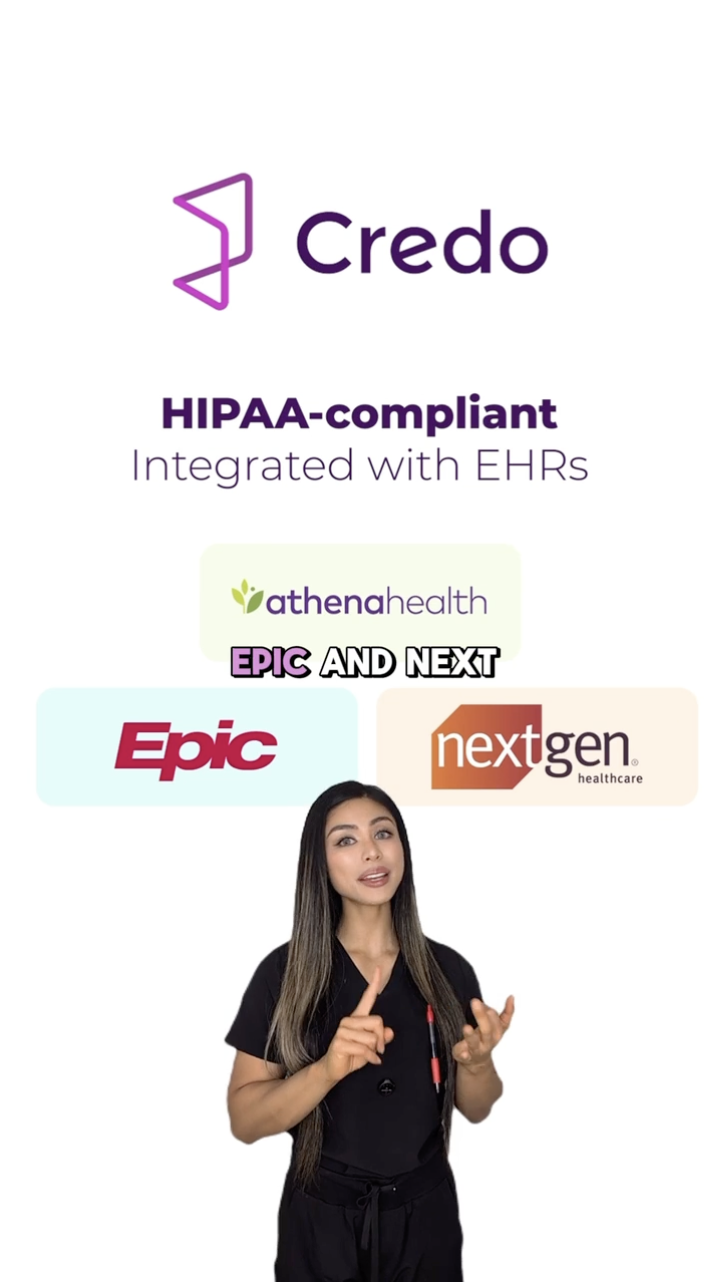
The examples below illustrate the style of creator-led healthcare advertising Matchnode produces. Notice that the content feels native to the platform, conversational, and authentic without sacrificing clear messaging or production quality.
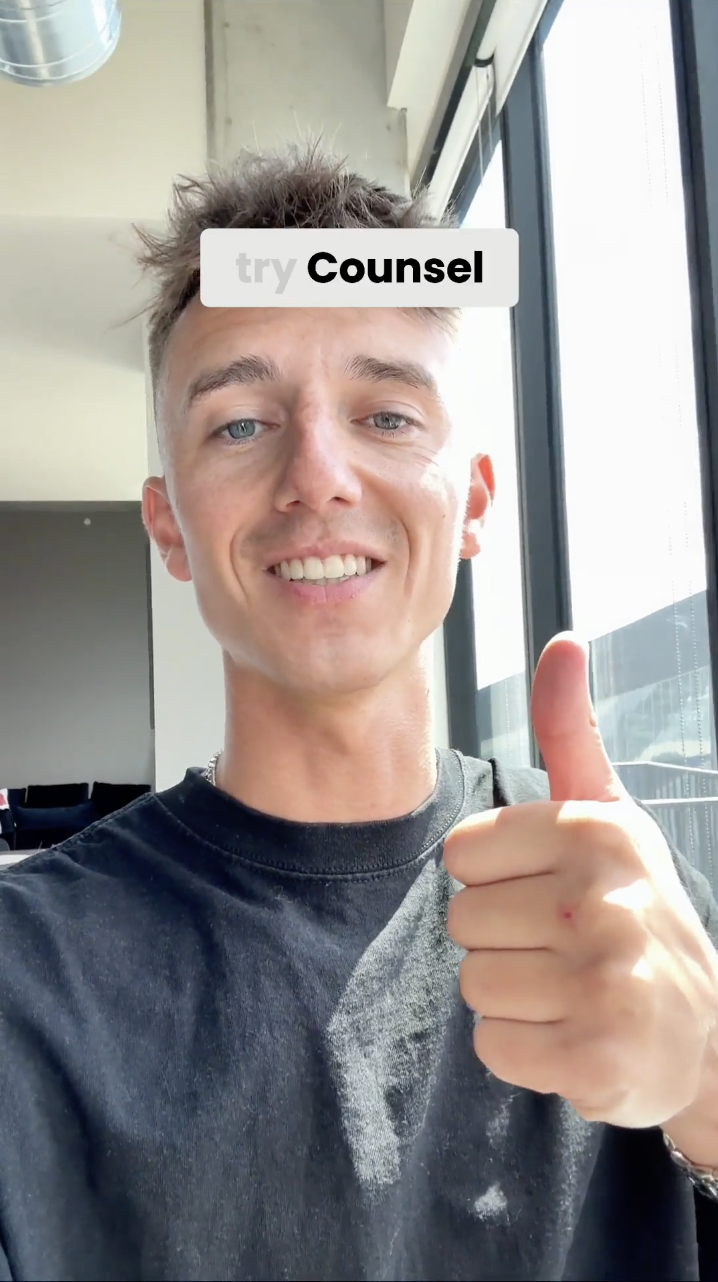
Counsel Health
Creator-led healthcare content designed to feel authentic, conversational, and native to social feeds while communicating a clear healthcare message. The creative emphasizes natural storytelling over polished commercial production, making it feel more like organic content while still supporting a structured healthcare advertising campaign.
Credo Health
Healthcare creator content demonstrating how authentic first-person delivery, structured creative direction, and thoughtful production work together to create stronger paid social advertising. The content feels native to the platform while maintaining the quality, consistency, and compliance required for healthcare campaigns.
Inside the Matchnode UGC Platform
Healthcare UGC becomes difficult to manage when creator sourcing, approvals, contracts, production, revisions, and client communication all live in different spreadsheets, inboxes, and project boards. As campaigns grow, operational complexity becomes a bigger challenge than finding creators.
To solve that, Matchnode built a healthcare UGC platform that keeps the production workflow together. Instead of managing creators, briefs, approvals, and videos across disconnected systems, the platform tracks every campaign from creator sourcing through final approval.
The goal is not simply better project management. The goal is making healthcare UGC repeatable without losing the authenticity that makes creator content effective.
The platform is designed around operational visibility rather than simple asset storage. Every campaign follows a structured workflow so creators, compliance, approvals, production, and client review stay connected from the initial brief through launch. The screenshots below show how that workflow is managed in practice.
Creator Management Starts Before Production
Purpose
Show that Matchnode builds campaigns around the right creators, not just whoever has the largest audience.
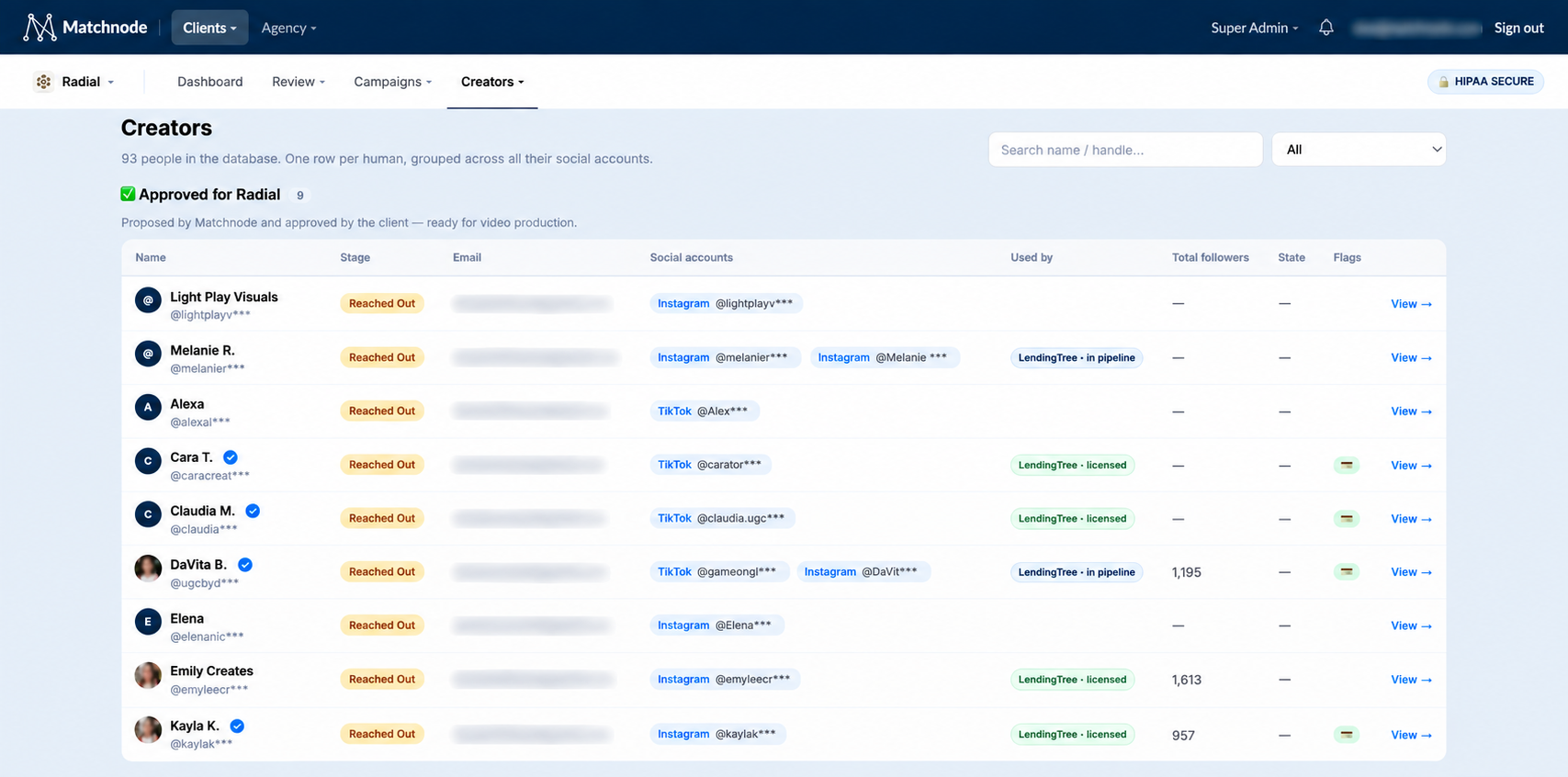
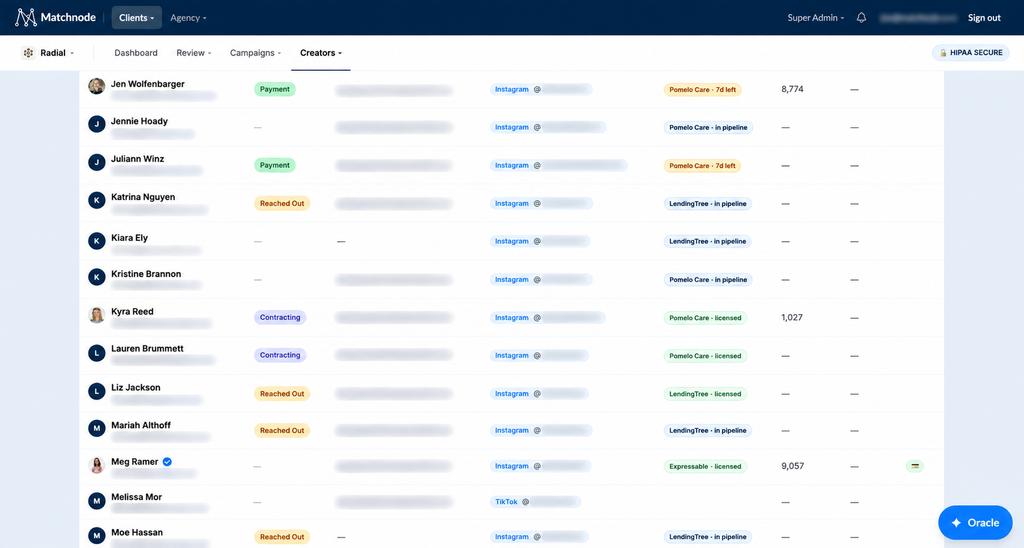
Figure 1. Creator sourcing begins with campaign fit, not follower count. Matchnode organizes creators by campaign, production stage, platform, and licensing status before outreach begins. Personal contact information has been redacted.
Healthcare Compliance Is Built Into the Workflow
Purpose
Show that Matchnode builds campaigns around the right creators, not just whoever has the largest audience
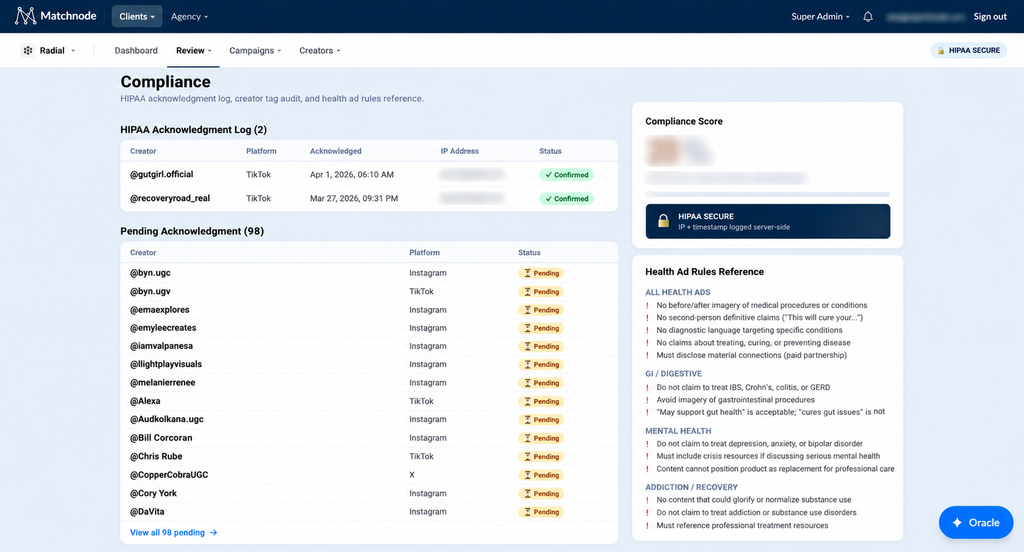
Figure 2. Compliance is built into healthcare UGC production. Matchnode tracks creator acknowledgements, healthcare advertising guidance, and production readiness throughout the workflow instead of treating compliance as a final legal review. Sensitive operational information has been redacted.
Creator and Client Approvals Follow a Defined Process
Purpose
Demonstrate that videos move through structured review stages instead of ad hoc approvals.
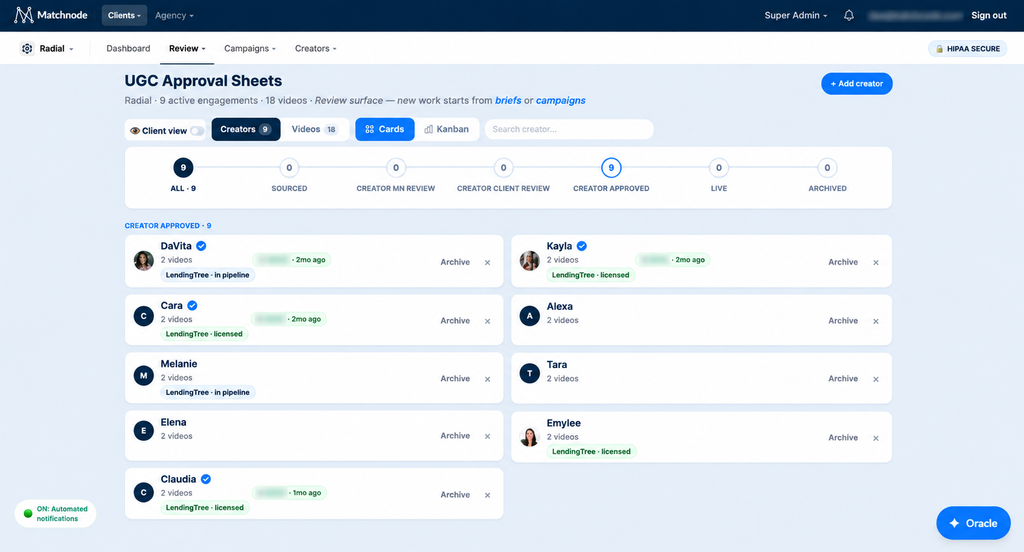
Figure 3. Structured approvals keep production moving. Creator review, internal review, client approval, and production status are managed through a defined workflow so campaigns move from briefing to launch without relying on disconnected emails or spreadsheets.
Payment, Usage Rights, and Creator Agreements
Healthcare UGC is professional creative work. Creators are not simply providing free social content that brands happen to discover. Every project begins with clear expectations around deliverables, approvals, revisions, payment, and how the finished content can be used.
At Matchnode, creators work from a defined agreement before production begins. That agreement establishes the working relationship, production expectations, creative requirements, revision process, and usage rights so everyone understands what will be delivered before filming starts.
Payment is also part of the production workflow. Creator compensation is managed after the final deliverables have been approved, allowing production, revisions, and client feedback to be completed before payment is processed.
Clear agreements help everyone involved. Brands know how assets may be used, creators understand the production process before filming, and creative teams can move projects forward without repeatedly renegotiating expectations during production.
From Production to Performance
Finishing production is not the end of a healthcare UGC campaign. Once creator assets are approved, the next objective is understanding which messages, hooks, audiences, and creative approaches actually improve campaign performance.
Rather than producing a single video and hoping it performs, healthcare marketers should continue testing different creative approaches while keeping the operational workflow consistent. The production process creates better assets. Testing determines which assets deserve additional investment.
For patient-story content specifically, Matchnode uses a separate framework for classifying and testing message approaches across the marketing funnel. That process focuses on how creator content should be tested after production rather than how it is sourced.
Learn more in our Healthcare UGC Patient Story Framework.
The Bigger Picture
Healthcare UGC succeeds because authentic creators help people see themselves in the story. But authenticity alone is not enough. Consistently producing high-quality healthcare UGC requires structured creator sourcing, thoughtful briefing, healthcare-specific compliance, clear approvals, and disciplined production.
The strongest healthcare brands do not treat UGC as another creative format. They treat it as a repeatable production capability that can scale across campaigns without sacrificing authenticity or operational control.
If you’re building a healthcare UGC program, Matchnode can help you source creators, manage production, and build creator-led advertising workflows designed for healthcare brands. Contact our team to learn more.