

- HIPAA applies to any digital marketing touchpoint that can combine a personal identifier with a signal about a health condition, treatment, or care relationship.
- HHS issued its first tracking-tech bulletin in December 2022, broadened the PHI definition in March 2024, and the AHA v. Becerra ruling in June 2024 vacated only the unauthenticated public page expansion.
- Cumulative healthcare pixel-tracking class-action settlements have crossed $100 million through 2025, so litigation risk now operates independent of regulator enforcement.
- The compliant marketing stack has four layers: a BAA-covered customer data platform, server-side conversion APIs, consent management, and identity resolution for first-party measurement.
- Pillar content and aggregated first-party audiences are the highest-impact acquisition assets in healthcare precisely because paid media is more constrained than in unregulated categories.
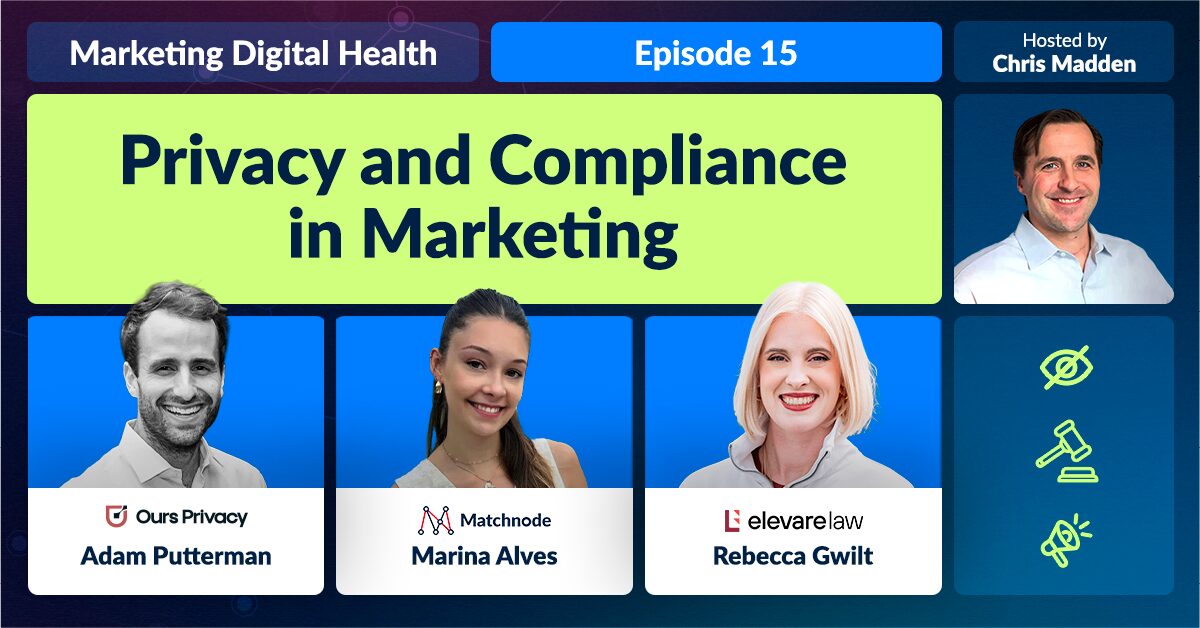
- For deeper coverage see Pixels, HIPAA, and the HHS, The Cookieless Future for Digital Health Ads, and our companion guide on paid search policies for healthcare. Audio companion: Privacy and Compliance in Marketing on the Marketing Digital Health podcast.
9 min read · Pillar: HIPAA-Compliant Advertising
Regulatory Timeline · Updated July 2026
HIPAA-compliant digital health marketing is no longer a niche concern for hospital systems and pharma. Any brand that touches a patient online, a telehealth startup, a behavioral-health platform, a specialty clinic, a digital therapeutics company, is now operating inside the same regulatory perimeter. The standard browser pixels, retargeting tags, and conversion events that power most digital advertising can quietly leak Protected Health Information (PHI) the moment a user lands on a condition page or completes an intake form.
The cost of getting this wrong is no longer hypothetical. HHS Office for Civil Rights began enforcement in late 2022, class actions followed, and cumulative healthcare pixel-tracking settlements have crossed $100 million through 2025. The opportunity is also no longer hypothetical. eMarketer projects US healthcare and pharma digital ad spend to reach roughly $26 billion in 2026, with digital climbing to 82 percent of the category by 2027. The brands that figure out compliant measurement first will compound an advantage over the ones still operating in the gray zone.
This guide is the pillar-level overview for HIPAA-compliant digital marketing in 2026. It covers what HIPAA actually requires of marketers, the recent regulatory shifts that reset the playing field, and the practical four-layer stack we use with Matchnode clients to acquire patients without legal exposure.
layers in the compliant marketing stack: BAA-covered martech, server-side attribution, consented audience design, and provable claims
HHS-OCR tracking-tech bulletin that set the original boundary on healthcare ad measurement
HHS-OCR bulletin update that broadened the definition of patient data in advertising
AHA v. Becerra ruling vacating key parts of the HHS bulletin and reshaping the rule set
What HIPAA actually requires of healthcare marketers
HIPAA was written in 1996 to govern how hospitals, insurers, and their direct vendors handle Protected Health Information. It was not written with the modern ad-tech stack in mind. The friction comes from the fact that PHI is defined broadly: any data point that can identify an individual combined with any signal about a health condition, treatment, or care relationship. A URL like /conditions/anxiety/ paired with a hashed user ID is enough.
That definition means a Meta Pixel firing on a condition page is technically transmitting PHI to a third party that has not signed a Business Associate Agreement (BAA). A Google Analytics tag capturing a referral path that includes a treatment search query has the same problem. The marketer running those tags is the covered entity (or a business associate of one), and the liability lands on them.
The three obligations that actually shape day-to-day marketing decisions are:
- Minimum necessary use. Only collect, store, and transmit the data you actually need to run the campaign. If a marketing platform does not need a user identifier to optimize, do not send one.
- BAA coverage for every vendor that touches PHI. A Business Associate Agreement makes the vendor legally accountable. Without it, any PHI the vendor receives is a breach, even if the data never leaks publicly.
- Auditable consent and access controls. Patients have a right to know who is processing their data and to revoke that processing. Your stack needs to support that.
The regulatory shifts that reset the playbook
The current enforcement environment did not appear out of nowhere. Three discrete events between 2022 and 2024 forced healthcare marketers to rebuild their measurement stacks.
December 2022: HHS issues the original tracking-tech bulletin
OCR published guidance treating standard browser-based tracking pixels on healthcare sites as a HIPAA violation when those pixels fire on pages that can imply a care relationship. This was the first time the federal government explicitly named Meta Pixel, Google Analytics, and similar tools as compliance risks for covered entities. For a step-by-step implementation guide to HIPAA-compliant attribution infrastructure, see our HIPAA-compliant attribution guide.
March 2024: HHS broadens the PHI definition
OCR issued an updated bulletin clarifying that PHI exposure can occur even on unauthenticated public pages, and even when the only identifier transmitted is an IP address or device hash. The update widened the universe of regulated pages to include condition information, provider directories, and symptom checkers, not just patient portals.
June 2024: AHA v. Becerra vacates portions of the bulletin
A federal court ruled in favor of the American Hospital Association on portions of the March 2024 bulletin, specifically the “unauthenticated public page” expansion. HHS declined to appeal in August 2024. The narrower definition remains in force, but the broader spirit of the guidance, that browser-based pixels and ad-tech tags can carry PHI when paired with health-related URLs, is unchanged. Enforcement and class-action exposure both continue.
Is this data PHI?
Does the receiving platform sign a BAA?
No → do not send. Yes → route server-side through a HIPAA-compliant CDP (Ours Privacy).
Standard CAPI is fine. Still de-identify URL parameters, suppress condition-naming page paths, and keep audience definitions off inferred health attributes.
The four-layer compliant marketing stack
Every Matchnode client running paid media in a HIPAA-regulated category uses some variation of the same four-layer architecture. The goal is to keep PHI inside BAA-covered systems while still giving ad platforms enough signal to optimize campaigns.
Layer 1: A BAA-covered Customer Data Platform
The CDP is the trusted middle layer. Patient identifiers and conversion events flow into it from your CRM, EHR, intake forms, and call platform. It hashes, normalizes, and filters the data, stripping anything that platforms do not need to optimize. Common BAA-covered options include Freshpaint, Segment with HIPAA add-on, and Tealium Healthcare. Without this layer, every other layer below leaks.
Layer 2: Server-side conversion APIs
The CDP pushes filtered conversion events directly to ad platforms through their server-to-server endpoints: Meta’s Conversions API, Google’s Enhanced Conversions for Leads, TikTok’s Events API, Microsoft UET via offline conversion import. The browser pixel either disappears entirely or is configured to fire only on non-PHI pages. Optimization signal stays strong, the regulatory surface area shrinks.
CAPI is one half of the compliant architecture. The other half is a Customer Data Platform: a compliance and data-hygiene hub that sits between every source of the brand’s first-party data (website, app, intake forms, CRM, EHR-adjacent systems) and every destination it flows to (Meta, Google, TikTok, email, SMS, analytics, BI, data warehouse). The CDP enforces HIPAA and the growing patchwork of state-level health privacy rules (Washington’s My Health My Data Act, California, Colorado, Connecticut, Texas, Virginia, and more) on every event, while also keeping identifiers, consent flags, and event taxonomy clean across the whole graph.
Most teams stand up a CDP for defense, to avoid the breach or patient-privacy violation that becomes a public incident. The bigger payoff is offensive: more creative tests can ship, more campaigns can run, and more attribution events flow back cleanly because compliance and data hygiene are enforced once and centrally rather than relitigated in every campaign or rebuilt for every new destination. Matchnode works with Ours Privacy as the default CDP for digital health clients, and supports any compliant alternative a client’s team has already approved. The full operational scope of CAPI buildout, CDP integration, and server-side event tracking lives on our technical services page.
Layer 3: Consent management and on-site governance
A consent management platform records, enforces, and audits user consent for every tag and tracker. Tags are loaded conditionally based on the visitor’s choices and the page category. Internal page-tagging conventions ensure no analytics fires on condition or intake pages by default. This layer is what makes the system defensible during a regulator inquiry or a plaintiff discovery.
Layer 4: Identity resolution for measurement
The hardest problem in HIPAA-compliant marketing is closing the loop from ad impression to booked patient without identifying anyone in the wrong system. Identity resolution stitches first-party identifiers (hashed email, CRM ID) across touchpoints so the CDP can attribute downstream conversions back to the original paid touch. This is what lets the analytics team report on cost per booked patient instead of cost per anonymous click.
Without a compliant stack
- Browser pixels leak URLs and identifiers to non-BAA platforms
- Class-action exposure on every condition page that loads a tag
- Optimization sees only top-of-funnel signal, CAC inflates
- No defensible audit trail if a regulator asks how data was handled
With a compliant stack
- Events flow server-to-server inside BAA-covered vendors
- Optimization signal stays strong on booked patients, not clicks
- Consent and tag governance produce a clean audit trail
- CAC compresses as platforms learn from real downstream value
Practical strategies for marketers operating under HIPAA today
The strategic moves that compound for healthcare brands are the ones that work because of the constraints, not around them. Three are worth highlighting.
Lean into educational, condition-aware content
Content that helps a patient understand their condition, treatment options, or next step ranks well in both classic search and AI Overviews, and it sits cleanly outside PHI rules because no individual patient information is involved. Pillar content is the highest-impact acquisition asset for HIPAA-regulated brands precisely because paid media is more constrained than in unregulated categories.
Aggregate and anonymize first-party data before activating it
First-party data activation, lookalike audiences, suppression lists, and cross-channel retargeting, is compliant when the data is properly aggregated and hashed inside a BAA-covered platform before being passed to an ad network. The audience is built from real patient behavior, but no individual is identifiable to the platform receiving it. This is how brands stay competitive on cost-per-acquisition without compromising the regulatory perimeter.
Use the HCP vs. consumer distinction deliberately
Healthcare provider (HCP) targeting and consumer patient targeting have very different compliance footprints. HCP audiences are licensed-professional databases with separate disclosure and consent rules. Consumer audiences sit fully inside HIPAA. Most healthcare marketing programs benefit from a clear split: one motion for HCP demand, one for consumer acquisition, each with its own stack and measurement model. For more on how Google and Microsoft regulate the paid search side specifically, see our companion guide on paid search policies for healthcare.
A pre-launch HIPAA marketing audit
Before turning on a new campaign or onboarding a new vendor, walk this short audit. It catches the issues that show up in plaintiff discovery and OCR inquiries.
- ✓Every vendor that receives any user-level event has a signed BAA on file.
- ✓Conversion events route through a server-side API, not a browser pixel, on any page that could imply a care relationship.
- ✓A consent management platform records and enforces user choices for every tag and tracker.
- ×No Meta Pixel, Google Analytics, or third-party retargeting tag fires on a page whose URL implies condition, treatment, or care intent.
- ×No PHI, including email addresses or phone numbers, is uploaded to ad platforms outside a BAA-covered CDP that hashes first.
- ×No vendor or platform receives raw URL paths that include condition or treatment slugs.
Industry coverage of the enforcement landscape, including Fierce Healthcare’s reporting on the ruling against HHS’s third-party web tracker policy, provides additional context for healthcare marketers navigating the post-ruling environment.
The Compliance Posture Marketers Should Hold
If you are a digital health marketer in 2026, the question is no longer whether HIPAA applies to your paid media program. It does, and the regulators, plaintiffs, and platforms all agree. The question is whether your measurement infrastructure can survive a discovery request and still deliver the campaign performance the business needs.
The brands that get this right are not the ones that pull back from digital, they are the ones that rebuild measurement so they can lean in harder. We have seen that play out repeatedly. The Bicycle Health case study describes how that brand nearly doubled lead volume and saw double-digit declines in cost per lead after rebuilding measurement on a compliant stack. Same patient base, same channels, more compliant signal, better results.
How AI Overviews Treat HIPAA Marketing Questions
Google’s AI Overviews and ChatGPT’s web-grounded answers increasingly surface healthcare information through synthesized summaries rather than blue links. The brands cited in those answers are the ones publishing structured, accurate, attribution-friendly content on their own domains. HIPAA-safe content marketing, pillar pages, condition guides, FAQ schema, is the most durable acquisition channel under both regulatory pressure and AI-search disruption. Investing in it now is a hedge against both.
For deeper coverage of adjacent topics, see Pixels, HIPAA, and the HHS for the regulatory history in detail, The Cookieless Future for Digital Health Ads for the identity-loss context that compounds the HIPAA constraints, and Meta’s New Data Restrictions for platform-specific changes. If you are sizing up a compliant build, Matchnode’s paid social services and work across additional ad platforms are organized around exactly this stack. For a platform-by-platform breakdown of which channels are HIPAA-compliant and what each requires to configure, see our HIPAA marketing channel strategy guide.
For the longer treatment, see Marketing Digital Health on Amazon.