
Google Ads for Digital Health
HIPAA-Compliant Google Ads for Digital Health Brands
We are a Google Premier Partner running Google Ads for digital health brands on top of server-side, HIPAA-compliant tracking. Your campaigns perform, your legal team stays calm, and the two finally stop pulling against each other.
Talk to Us About Your Program
Google Ads Program Management for Digital Health and Telehealth Brands
Matchnode has driven 4M+ conversions and managed $100M+ in media spend for digital health, telehealth, and digital therapeutic brands. Our Google Ads for digital health programs run on HIPAA-compliant infrastructure, with LegitScript certification support built into every engagement, and we are a Google Premier Partner. Our ad format mix covers Search, Performance Max, Demand Gen, YouTube, and AI Max. Search runs on copy; every other format runs on creative, which means creative strategy and production is a core part of the program, not a side task.
Ad formats we run: Search, Performance Max, Demand Gen, YouTube, and AI Max as it rolls out.
Who it’s for: Digital health, telehealth, digital therapeutics, and healthcare brands scaling paid media.
Credentials: Google Premier Partner 2026, LegitScript certification support, HIPAA-compliant CAPI and CDP.
What clients get: A Google Ads program that drives real conversions AND passes legal review.
Google Is Not Just a Search Engine Anymore
Google Ads for digital health used to mean Search campaigns and little else. The Google ecosystem now reaches patients at every stage of their decision, from first symptom search to conversion. Search is still at the center, but a lot of the reach, learning, and scale comes from the surfaces around it.
Meta finds patients and tests creative. Google captures patients already searching. The same server-side infrastructure powers both. One technical setup, two complementary channels.

Which Google Ads Format for Which Job?
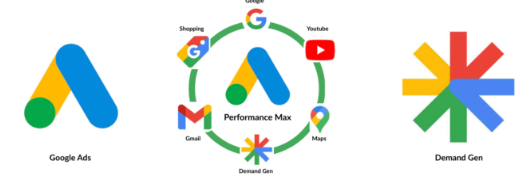
Search, Performance Max, Demand Gen, and AI Max each serve different stages of the patient journey. Most engagements run two or three together, weighted by stage, creative inventory, and LegitScript status. Search is the only format that runs on copy alone; the rest are creative-heavy.
| Search | Performance Max | Demand Gen | AI Max | |
|---|---|---|---|---|
| What it is | Text ads against keyword queries | Single campaign across all Google surfaces | Visual campaign across YouTube, Discover, Gmail | Google’s next-generation AI-driven campaign type, built on PMax |
| When to use | Capture existing demand | Scale across the ecosystem with AI allocation | Build demand and reach patients not yet searching | Early-adopter test once PMax is stable and signal is clean |
| Intent stage | Bottom-funnel | Full-funnel | Top- and mid-funnel | Full-funnel, broader than PMax |
| Creative needs | Ad copy and extensions | Text, image, and video asset groups | Image and video assets | PMax asset pool plus Google-generated variants from your inputs |
Creative Is the Other Half of Google Ads
Search runs on copy. Performance Max, Demand Gen, YouTube, and AI Max all run on a steady flow of video and image assets. Once the tracking foundation is in, creative becomes the bigger lift, and the brands that win on Google are the ones treating creative as a rolling program rather than a one-time build.
Search
Responsive search ads: 15 headlines, 4 descriptions, extensions, and sitelinks. Copy runs in rotation and gets A/B tested against match types and audience segments.
Performance Max
5 to 10 videos plus 10 to 20 images per asset group, with text and logo variants. Quarterly refresh. Winners from paid social port in as new asset groups. Segmentation by audience and creative angle.
Demand Gen and YouTube
15 and 30 second in-stream cuts, 6 second bumpers, short-form vertical, image carousels for Discover and Gmail. Styled to feel native to each placement rather than to scream "ad."
AI Max
Same asset palette as PMax, but Google’s generative tooling spins more variants on top of your inputs. The brands with the strongest raw creative get the strongest AI-generated outputs. Garbage in, garbage out still applies.
The Meta-to-Google pipeline: creative tested to winners on paid social gets ported directly into Performance Max asset groups, Demand Gen placements, and YouTube cuts. Paid social is our fastest creative laboratory; Google is where the proven winners scale. Running them together is how we keep the Google asset pool fresh without reinventing creative from scratch every quarter.
One Technical Setup, Two Complementary Channels
Most of the brands we work with get better results running Google Ads and paid social together than putting all the budget in one channel. The two channels compound when the tracking underneath is shared.
Paid Social
Finds patients who are not yet searching. Tests creative and messaging at speed. Builds brand awareness that lifts branded search. Retargets warm Google traffic that did not convert on the first visit.
Google Ads
Captures high-intent patients already searching. Scales creative winners from paid social into Performance Max. Runs on the same server-side pipeline as Meta, so one technical build feeds both.
Where the compounding happensPaid social lifts brand search, which lifts Google Ads conversion rates on branded terms. Creative winners tested on Meta port directly into Performance Max asset groups, Demand Gen, and YouTube placements, where most of the Google inventory now lives. Every conversion from either channel feeds the same server-side pipeline, so attribution stays coherent across the stack.
The technical build behind this is documented on our Technical Services page. The Google Ads program is what runs on top of it.
Most Digital Health Brands Run Google Ads on a Broken Foundation
We see the same failure pattern over and over. The campaigns are spending. The dashboards look busy. But the numbers underneath are either misleading, non-compliant, or both.
Broad Match Is Eating the Budget
Smart Bidding plus broad match can pull huge volumes of low-intent traffic if the conversion signal is noisy or misconfigured. A lot of healthcare brands are paying for clicks Google should not have been serving.
Performance Max Without Guardrails
PMax will spend everywhere it can if you let it. Most accounts we audit are missing brand exclusions, audience signals, and asset group discipline, so the algorithm is optimizing against partial data.
Broken Conversion Tracking
If your conversion signal is coming from a browser pixel, iOS 14 and ad blockers are quietly erasing 30 to 40 percent of it. The algorithm learns from what it sees, and what it sees is incomplete.
LegitScript Gaps
A lot of the healthcare search terms worth bidding on are locked to LegitScript-certified advertisers. Brands without certification are locked out of inventory they did not know existed.
Google Is Still Where the Highest-Intent Healthcare Demand Converts
HOW WE WORK
How Matchnode Approaches Google Ads
Every engagement follows the same sequence. Audit first, foundation second, launch third, iterate against real business metrics as long as we are running together.
Audit
Review the existing Google Ads account, tracking pipeline, conversion signal quality, and LegitScript status. Identify what is working, what is broken, and what is leaving money on the table.
Build the Compliant Foundation
Server-side CAPI, HIPAA-compliant CDP, LegitScript certification where needed. The campaigns only work if the data layer underneath is clean.
Launch and Scale
Campaign structure, format mix, creative strategy and production, bidding, audience signals, and brand exclusions. Once the tech plumbing is in, creative becomes the bigger lift, so we produce net-new assets and port in winners from paid social in parallel.
Iterate Against CRM Truth
Weekly working sessions. We optimize against metrics that move the business (cost per booked appointment, cost per qualified lead, ROAS), and the Google Ads UI numbers match CRM numbers because the pipeline is clean.
Google Ads Program Management, End to End
Strategy, Structure, and Intent Mapping
Account structure, ad format mix, and bidding strategy mapped to where patients actually are in their decision, with search terms segmented by intent stage. We build for how Google works now, not how it worked three years ago, and keep Smart Bidding focused on queries that actually convert.
Performance Max Guardrails
Brand exclusions, audience signals, asset group segmentation, and placement exclusions. We give PMax enough structure to scale without letting it eat the budget on junk placements.
Creative Strategy and Production
Search runs on copy. Performance Max, Demand Gen, and YouTube run on creative. We produce video and image assets for PMax asset groups, Demand Gen placements, and YouTube in-stream, and port in proven winners from paid social. Creative is a rolling program, not a one-time build, because the algorithms reward fresh assets.
Landing Page and Conversion Strategy
Most Google Ads programs lose the sale on the landing page, not in the auction. We work on message match, form design, and conversion point strategy so the traffic you pay for actually converts.
Reporting and Iteration
Weekly working-session cadence with reporting built around the numbers that move the business: cost per booked appointment, cost per qualified lead, ROAS. Not vanity metrics. Because the conversion signal runs through the server-side pipeline, the Google Ads UI numbers match CRM numbers instead of drifting.
The Rare Combination Healthcare Advertising Actually Needs
Most performance agencies can run Google Ads. Most HIPAA-compliance shops cannot. Matchnode brings all three together, so you get performance and compliance from the same engagement. The technical foundation is documented on our Technical Services page.

LegitScript Unlocks Healthcare Inventory You Cannot Otherwise Bid On
A meaningful portion of Google’s healthcare inventory is locked to advertisers without LegitScript certification, including a lot of the treatment-related search terms that actually convert. We run the certification process for you and structure campaigns around what the certification unlocks.
How Google Ads Fits Into the Matchnode Program
Technical Services
Server-side tracking, HIPAA-compliant CAPI, and the CDP foundation underneath every Google Ads and paid social program.
Read more →Paid Social
Meta, Instagram, Facebook, and TikTok paid programs. Runs on the same HIPAA-compliant pipeline as Google Ads and compounds against it.
Read more →More Ad Platforms
Programmatic display, CTV, programmatic audio, Reddit, LinkedIn, Bing, and Nextdoor when the audience and creative fit.
What is LegitScript, and why does it matter for Google Ads?
LegitScript is a third-party certification program that Google uses to gate a portion of its healthcare ad inventory. Advertisers in categories like addiction treatment, telehealth, and certain prescription drug categories are locked out of those placements until they complete LegitScript certification.
It matters because a lot of the highest-intent search terms sit inside that gated inventory. Without certification, you are bidding against a smaller auction with fewer options. We run the certification process for clients and structure Google Ads campaigns around what the certification unlocks.
How long does LegitScript certification take?
Most LegitScript certifications clear in 4 to 8 weeks once the application is submitted, depending on category and how quickly the applicant can supply supporting documentation. We run the process for clients: scope the certification package, assemble the file, submit, and handle follow-up questions from LegitScript.
Timeline expectations are part of the engagement kickoff, and we build the Google Ads campaign plan around when the certification is likely to clear so nothing sits idle waiting.
Can you run Google Ads for a telehealth or digital health brand without HIPAA risk?
Yes. Running Google Ads for digital health brands safely requires a server-side, HIPAA-compliant tracking pipeline underneath the campaigns. You cannot legally pass identifiable health data through a standard browser pixel or through GA4 as it ships out of the box.
We build the technical foundation as part of the engagement (or on top of one you already have), then run the Google Ads program against that foundation. See the full Technical Services page for the compliance detail.
What Google Ads formats do you run for digital health clients?
For Google Ads for digital health brands, we run Search, Performance Max, Demand Gen, YouTube, and AI Max as it rolls out. The format mix depends on the client’s stage, category, creative inventory, and LegitScript status. Most engagements start with Search and Performance Max and layer in Demand Gen and YouTube as creative production ramps up.
Why do you recommend running Google Ads alongside paid social instead of picking one?
Because they compound. Paid social finds patients who are not yet searching and tests creative at speed. Google captures patients already searching and scales the creative winners from paid social into Performance Max and Demand Gen. Paid social also lifts branded search volume, which raises Google Ads conversion rates on branded terms.
When the tracking pipeline is shared across both channels, attribution gets coherent and the algorithms on both platforms have more signal to learn from. We see better cost per acquisition running both together than running either one at the same budget alone.
How is Performance Max different from regular Search campaigns?
Performance Max (PMax) is Google’s all-surface AI-driven campaign type. A single PMax campaign can serve on Search, YouTube, Display, Discover, Gmail, and Maps based on where the algorithm thinks the next conversion is most likely. You provide the assets and the audience signals; Google decides the placements.
It works best when it has clean conversion signal, well-segmented asset groups, brand exclusions, and real audience signals to learn from. Most PMax accounts we audit are missing at least two of those four.
How much creative do you need to run Google Ads well?
More than most brands expect. Search is the only Google Ads format that runs on copy alone. Performance Max, Demand Gen, and YouTube all need a steady flow of video and image assets: YouTube in-stream, short-form video for Demand Gen, images for Discover and Gmail placements inside PMax, and product imagery where applicable. Once the tech plumbing is in, creative becomes the bigger lift.
We run creative strategy and production as part of the engagement. That typically means fresh shoots each quarter, paid social winners ported into PMax asset groups, and continuous iteration on what is performing. Creative decay on Google inventory runs faster than most brands plan for, so the program is built to keep the pipeline feeding.
What is AI Max and do we need to be running it?
AI Max is Google’s newer AI-driven ad product that extends what Performance Max does across additional surfaces and creative formats. It is part of the broader move toward AI-optimized campaigns where the advertiser provides assets and signal, and Google allocates placement.
Whether it makes sense for you depends on your data, creative inventory, and category. We evaluate it on a per-client basis rather than defaulting it on.
How do you measure Google Ads performance for a digital health brand?
Around the numbers that actually move the business: cost per booked appointment, cost per qualified lead, cost per intake completion, and ROAS where revenue is trackable. Click volume and CTR are inputs we watch, but they are not how we keep score.
Because the conversion signal runs through the server-side pipeline, the numbers in the Google Ads UI line up with the numbers in the client’s CRM, which is not always true in accounts we inherit.
Do you require a minimum Google Ads budget to work together?
We work best with brands spending five figures a month or more on Google Ads, roughly $10,000 as a starting floor. Below that, most of the optimizations we would make do not have enough conversion signal behind them to hold up statistically.
We are happy to have a conversation either way. If your current spend is below that floor, we can usually tell you whether it is worth scaling up and what the technical foundation would need to look like first.
Ready to Build a Google Ads Program That Actually Holds Up?
If you are running Google Ads for a digital health or telehealth brand and the foundation underneath feels shaky, let’s talk. We will audit what is running, tell you what is working, and scope what a compliant build looks like from here.
Talk to Us About Your Program