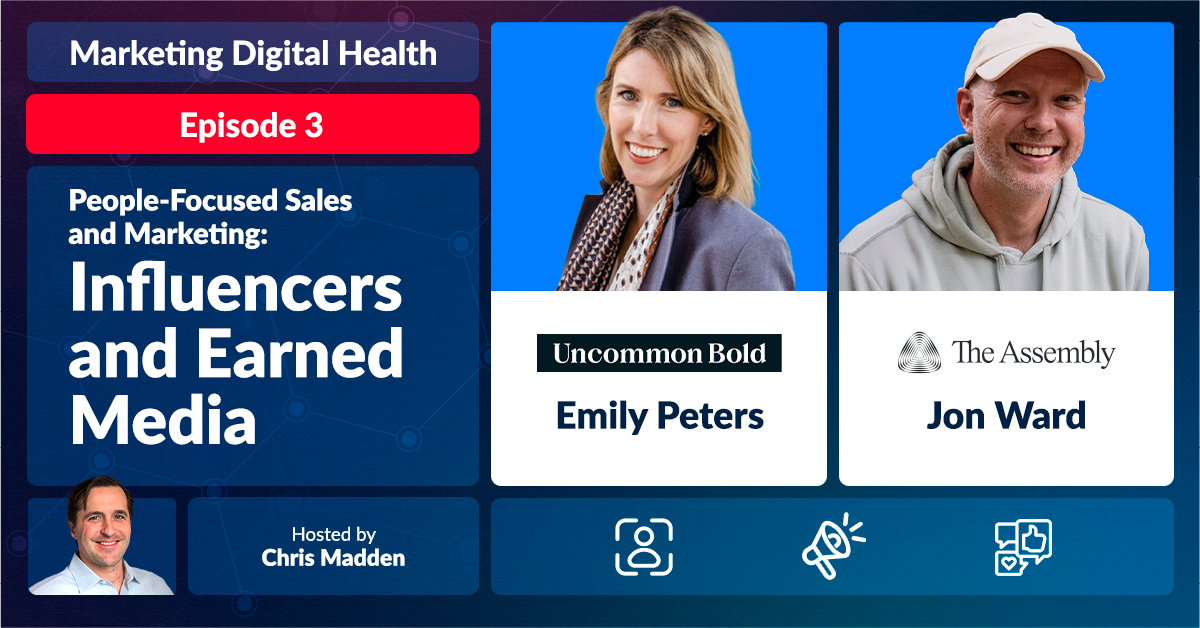


Digital health earned media works when it is genuinely people‑focused. In this episode we unpack how PR, editorial coverage, and influencer relationships can build credibility, expand awareness, and move patients toward action—without resorting to gimmicks. Emily Peters explains why headlines without substance backfire in healthcare and how to anchor every story in real outcomes, clinical alignment, and safety. Start by mapping the communities that shape decisions: clinicians, patient advocates, operators, and the editors and producers they trust. Show up with a clear point of view, timely context, and data that can be cited.
From there, Jon Ward walks through influencer strategy that actually delivers: prioritize values alignment, lived experience, and community leadership over raw follower counts. Healthy programs look more like relationship graphs than ad buys, with rituals and co‑created content that give people reasons to return. Compliance matters—use clear disclosures and avoid claims you can’t back up—but that doesn’t mean boring. The win comes from pairing human stories with credible proof and a frictionless next step. Measurement spans both depth and breadth: coverage quality, share of voice in relevant niches, referral lift, attributed signups, and downstream patient acquisition. Treat earned and influencer work as a repeatable system that compounds trust over time.
Learn how earned media and public relations shape credibility, elevate brand awareness, and drive patient acquisition in the digital health space.
This conversation brings two practitioners who grow health brands the human way, focusing on relationships, credibility, and proof. They show how people, not just platforms, drive awareness and patient action.
The world works because of relationships — human relationships — and the charisma of your company and how you align with people’s priorities.
Emily Peters
Founder of Uncommon Bold, an award‑winning healthcare brand strategy studio. With roots in journalism and a historic run at Practice Fusion, Emily has advised health plans, tech innovators, and startups on mission‑led growth where credibility, relationships, and outcomes do the heavy lifting.
It’s really grassroots and human‑to‑human. Let’s get to know one another. The business will occur in a natural and organic fashion, as friendships are built through shared experience.
Jon Ward
Founder of theassembly.health and former VP of Sales and BD at Plunge, Jon helped shape one of the most resonant wellness brands of the last decade. He focuses on relationship‑driven growth, creator networks, and partnerships that connect health products to real behavior change.
Emily Peters:
The world works because of relationships and human relationships and the charisma of your company and how you align with people’s priorities and what they’re trying to achieve.
Chris Madden:
That was Emily Peters, she’s one of the guests in today’s episode. In a world flooded with ads and AI driven content, credibility is everything, and trust is required for scaling digital health. Authentic conversations that build relationships with real people have always been the primary way to build such trust.
We go deep on surfacing digital health messages via influencer marketing, earned media, media relations, and more. This is Marketing Digital Health, and I’m your host, Chris Madden. This episode is all about how to elevate your brand awareness ultimately so you can drive patient acquisition. The experts in this episode, Emily Peters and Jon Ward will share with us their insights on strategies surrounding reaching the right people through channels and audiences that others already own, which works only when the message in audience align when it comes to health.
First, let’s hear from Jon. Jon Ward is the founder of The Assembly and former VP of Sales and Business Development at Plunge, where he helped shape one of the most emotionally resonant and virally loved wellness brands of the last decade. From leveraging influencer networks to launching partnerships that mattered. Jon brings a deeply human and tactical lens to building trust, driving behavior change, and connecting health products to personal transformation. At Plunge, the social media strategy is centered on getting the right people to discuss the brand experience authentically. As these online influencers already had built substantial trust with their audiences and they naturally fit well with Plunge.
Jon Ward:
If you’re a startup, unless you’ve raised a bunch of money, you don’t have money to go do anything else. So the initial rollout of kind of the affiliate influencer side was let’s just get in the best people that we know that represent the brand well. And by doing that, it was like Angie Huberman and it was Abby Marcus, and it was Dr. Rhonda Patrick and Tony Hawk. And it basically took profits and started like rolling it directly to that. And the goal was that if we got the most aligned eyeballs, like something good would probably happen. It was probably more a hypothesis than anything, but what we found is it made us seem like we had more product in more places than we probably were, just by being really strategic about the placement.
And over time it was our key strategy to growth. The unique thing about us is there was other brands in the space, but they didn’t have great product market fit, and their price point was a lot higher, and we came in and fit really well. And ultimately wanted to make it cool and make it fun and make it engaging.
And because we were the thought leadership and we were way ahead of the curve, it allowed us to be flexible and make errors and trial and error. And we would just reposition marketing dollars towards, rather than spending on ads, gift free tubs. And the exchange would always be, we need you to express this in a very organic and natural way, like what’s happening?
The secret sauce is that the product was doing the thing. So like if you have the thing that’s creating the experience and all you have to do is capture it, a lot of times we wouldn’t even have something for them to say. We would go, just say exactly how you’re feeling right now. And that is a very unique moment, because most times the curation of the moment is usually what is occurring.
Once we started that program, and then I would say a couple years in, we just kept ramping that up and it became on every social platform, we would get people calling and go, look, I can’t see another ad or another person talking about cold plunging. I’m just gonna buy this because everybody’s doing it. It’s the new form of the television and commercial, and we just did it through rather than paying a bunch of money to do it. It was a very economical, smart way to do a startup.
Chris Madden:
That kind of omnipresent messaging from influencers is one way to deliver big results with clear ROI.
Next, Jon talks about his overall marketing approach. He recommends getting clear on your priorities, asking yourself pointed questions, and fitting your approach to your goals.
Jon Ward:
What was amazing to us, and this is why like product market fit is so important to me, we had to say no to people all of the time, and we had to pick where we wanted to get our viral moment from.
What segment, what market, where do we want to tap into? And you would take your shot from time to time. The mechanical part of it would be, okay, what market are we interested in, like exposing now, how much do we allocate to it? How much product do we allocate towards it? Do we need to scale back? Is this an area that’s actually has a signal?
And when we started focusing less on mass exposure, which is, that’s what everybody wants, you go to someone that has a big audience and they have massive engagement, and they said that was important at the time, it’s not as much now. The initial push was, we’re getting signal, let’s just keep expanding and let’s see where we’re getting more signal from.
And then we grew a pretty big number of tubs that we would give out every month. And then we just repositioned the brand once there was enough exposure, enough PR out there that we would just hyperfocus on very specific areas. So like health and wellness was one. Fitness influencer was another. YouTube reviewers was another, and through that process, especially on the YouTube reviewers or even doing traditional press releases and working with an organization like Men’s Health or something like that, we would send something out with them and then we would see the signal back.
The main point is that at one point it was about mass exposure, and then another point it was about hitting a market. And then at the end of it, because we had touched those, how do we actually monetize this now? How do we create a whole different channel that people can, we can just rely on, support these people?
It’s essentially an extension of a sales force, except you’re continuously getting marketing from them. And I think at the end of the day, what I found on it is you do have your billboards, you have your commercials. Then you have like your extension of your company, and those can be considered ambassadors or they can be considered affiliates.
But getting the true sources of those people who are dedicated business people changed the game for us.
Chris Madden:
Another way of getting there, he adds, involves finding the right aligned brands and verticals to work with. While the intent is to tap into your partner’s markets, it wasn’t hard for Jon and the marketing team at Plunge to create win-wins with their partners.
Jon Ward:
We would go, hey, we’re gonna get emails. You gotta do a post. We gotta tag three people. You gotta give us your email. And so the email has a lot of value. You could attach a monetary value to each email, and then we would do a giveaway. We’d give a smaller type away. We would give a bigger type away, but the connection between brand to brand, one, it would drive more alignment.
And in future state we would share things together. But everybody that would essentially be in that network, to them, would become part of ours. And we had access to so many brands. GORUCK was a great one that we did. Great audience. It’s a more premium product for what it is. Had huge success. TRX was another one. We did ones with Alo. We did ones with a bunch of different brands in general, and it was across apparel, fitness products, brick and mortar. And I think through being semi strategic, I wouldn’t say there was a long tail to a lot of those. A lot of those were fairly transactional in nature, but we gained and garnered so much more exposure and direct sales through gaining all those emails.
The email was the champion. And we would just put ’em in our lifecycle and then it would turn into something over a course of time and we would just track it as we went.
Chris Madden:
That willingness to cooperate with other brands is clearly an intentional effort that paid dividends in their efforts to help growth companies scale, to upgrade and become full-blown players in healthcare. Emily Peters takes a slightly different tack.
Emily Peters is the founder of Uncommon Bold, a strategic communications and branding firm focused on digital health with roots in journalism, a historic run at Practice Fusion and deep experience, including enterprise across the Blues, Medicaid initiatives and growth stage startups.
Emily brings a relational mission led lens to how modern healthcare companies earn trust and grow with intention.
Emily Peters:
At Uncommon Bold, we have a very specific set of skills in helping companies make that transition from being an early stage company, often focused on direct purchasing from patients, or sometimes even direct purchasing from physicians into becoming a mature healthcare company, which 99% of the time always includes some kind of enterprise element.
And it can be a very difficult transition from a mindset perspective, like culture perspective, mission, goal alignment, valuation. Like you start as a small team and you might be saying, okay, we’re gonna make sure people get inhalers right and we’re gonna sell these incredible inhalers and we’re gonna sell them directly to people.
If we think of our like classic tech startup, you have your early adopters in your early hype cycle, right? And you might get your big investment and great, and now you’re onto this next phase and there’s only a limited amount of market there, right? So like you’re gonna run out of patients, you need to shift into an enterprise story.
It’s so different. If you had big, you know, social media marketing, traditional influencer marketing, paid search, paid growth, all of that is completely different now if you’re shifting over into an enterprise sales cycle where it’s reputation building with literally a dozen big payers, right? You’re talking about how can I work with health plans, how can I work with employers?
It’s a completely different kind of relationship. It’s a different kind of valuation. Just even the timeline of those deals, as a direct to consumer company, you might be looking at maybe a couple weeks, right, from like the top of the funnel all the way through to that engagement. In an enterprise, you’re lucky if it’s a year.
And so to help companies understand how to evolve their brand and really pivot it through that.
Chris Madden:
For Emily, that process is fun and there’s a lot of learning involved. She says she prioritizes helping companies understand the full picture to figure out how they can take advantage of their unique mission to acquire patients.
Emily Peters:
Trying to help companies understand this crazy healthcare economic system that we have and who’s a buyer, and being able to show them how their product really aligns with the incentives of those markets and how it maybe fits in that kind of story, hopefully without losing the magic and the special sauce that made their company really unique in that mission, that pattern matching of how do you click into an enterprise world and still be a very passionate, really excited company that’s doing good.
That’s aligned with what your values of like why you started this and your valuation.
Chris Madden:
According to Emily, who’s from the San Francisco Bay Area, the healthcare industry works much differently than how the Silicon Valley scene works, where product and technology are king, and that means the health space requires tailoring your marketing approach.
Emily Peters:
There’s this idea that you’re gonna be able to like create such an amazing product and you’re gonna be able to A/B test it, and those are the only two things that you need to succeed. There might be a couple of cases, I’m not actually having worked in that world, but that’s lightning strike. Like that is not how the world works.
The world works because of relationships and human relationships and the charisma of your company and how you align with people’s priorities and what they’re trying to achieve. And being really user centered, if you will, another Silicon Valley term of how you think about your brand. And so we do a lot.
And probably the second thing that we do after converting B2C companies into enterprise companies is converting very product driven companies into companies that have full body and skin and heart and emotion and relationship. That it’s not just that one piece of really incredible technology, which can get you from a Series A.
You could sign a couple really big deals. You can strong arm a great product out into like a Series B level success. But after that, you still need to be having relationships. You still need to really be having a reputation and something that sets you apart. The thing that people also kind of overlook with it, it can be really playful.
So I work a lot in interoperability world and health data network and data analytics, and there are just hundreds of thousands of companies in this space that all look and sound pretty similar, right? And there’s a company called Elkay, which is spelled E-L-K-A-Y. They have bees on the roof of their headquarters and when they go to trade shows, they bring honey and they bring beeswax chapstick, and they bring a caramel corn made with the honey.
I use that as a case study all the time. That has nothing to do with their actual technology or product or what they’re trying to do in terms of being a technology company. It has everything to do with standing out from the crowd and being memorable and being interesting. And they built all this incredible stuff around this bee theme.
And you can go and visit the office and see the bees, because some of their marketing communications are from the hive. It’s fun. This is a fun thing and that’s the reason that I remember the name of that one company versus the hundreds of other interoperability health data companies that are out there. It doesn’t always necessarily need to be product first, A/B tested. It should have a personality, and that personality will really be a massive differentiator in something that assists you in getting those deals done.
Chris Madden:
Emily says that a unique identity can make you memorable, but you still need to get the message out, and influencer marketing is the new way to leverage others’ relationships.
Emily Peters:
You know, influencer marketing, when we talk about big enterprise healthcare decision making, is also incredibly powerful. And, you know, we know we’re in a very small pond here in the digital health world. There’s only so many of us who really are working in this space and who are making decisions. And so.
One of the areas of opportunity, place I think that we tend to underinvest, is thinking about influencer marketing in terms of clinicians, in terms of buyers, in terms of payer voices, employer voices. A lot of enterprise healthcare technology companies really shy away from getting people to be evangelists of their technology, right?
Even if they are beloved and they have great case studies, they’re not necessarily bringing together like an advisory board or bringing people together for events or to have those conversations and really talk about what’s cool about it. I think sometimes people, it’s infrastructure technology. It’s things like physician shift scheduling or, you know, managing sterile processing.
It’s too boring, but the people who love those worlds, right? I had one of the best conversations in healthcare I’ve had is with a guy who ran sterile processing in a hospital and he would’ve talked about it for a hundred hours and it was fascinating. I mean, he really loved it, right? Like, this is such an incredible part of how a hospital works.
And so that evangelism is something that even the driest, most technical infrastructure pieces of healthcare, there is a lot of opportunity to consider that through an influencer lens and to have those conversations and really be able to lift up people who are evangelists for you.
Chris Madden:
That curious approach is what uncovers specialist knowledge and stories from the trenches, which makes for awesome and captivating content.
Speaking of content, there are also some old school techniques to augment your brand strategy. One of them, Emily says, is publishing a book.
Emily Peters:
Books are an incredible tool for PR, for brand strategy, for getting media relations, for building reputation, for being able to tell your story. They still carry like a really significant cultural cache.
A book might not be that much more work necessarily, than putting together a podcast or a webinar or something else. There’s just something about a book that people really love. I love, I bring in collaborators. This last book had 25 different artist collaborators in it. You know, just an incredible way to open doors and to listen to what people have to say and to elevate them and to create evangelists around your work.
And so I’m working right now on the new book, which is about money remaking medicine. And so we’re looking at how to address costs and people who are doing really innovative things around the financial side of healthcare, which is very spicy and very taboo and a lot of fun to work on so far.
Chris Madden:
Emily says that brand strategy and reputation, being authentic, matters today now more than ever in a marketing field that has been leveled by AI and other influences.
Emily Peters:
One is that it is much, much easier today in an AI driven world to create something that appears to be a real brand or appears to be high value. There was a shortcut for maybe the last 20 or 30 years that if you invested in a nice enough looking website. It was polished. It had some good messaging on it.
You would look real. Not everybody would be able to invest in a nice enough website. Now anybody can create a website that looks really real, that says healthcare solutions on the top of it, and that you’re improving patient outcomes and blah, blah, blah, and like nonsense. So you need to work way harder to have a real reputation.
To have real word of mouth, to really be understood in the market, because there’s a lot of slop out there, there’s a lot of competitors, there’s a lot of legacy technology. It’s just a very, very crowded space. And so if you really are trying to do something and be known, brand strategy is the way to be differentiated in the market, and especially in healthcare technology, which is deep enterprise sales.
This is relationship driven, reputation driven marketing. You’re not trying to sell like a lipstick, have like a one and done experience off of Instagram, and maybe it’s a great experience, maybe it’s a terrible experience, but we’re talking about signing millions and millions of dollars of contracts over many, many years.
This is something that you should take really seriously, how your reputation is in the market, and the more seriously you take it, the more the market responds. Now your enthusiasm is very contagious. Right. And so how are you showing to the market that you are enthusiastic, that you are genuine, that you are real, that people are enthusiastic about you?
That’s what drives change, especially in the enterprise health.
Chris Madden:
A big part of your enterprise’s reputation has to do with building relationships, which require investment. He recalls how difficult it was for him to feel a benefit from traditional networking events. His answer was to create his own event, more intimate, on the beach, and focus on wellness experiences instead of keynote speeches.
It brings together decision makers from health and wellness to build friendships first, so the business deals happen naturally.
Jon Ward:
It’s bring together the best minds in health and wellness, get them to do experiences together. When you go on a trip with someone, a group of people, family, you remember those moments.
So how do we create the Davos of wellness, with an adult summer camp vibe, with the key decision makers in the space, and we just get them to do a bunch of experiences, personal, maybe there’s some professional mixed in. We wanted to keep the keynote speaker down because most people in the room probably could be a keynote speaker.
Lots of fireside chats, lots of us doing uncomfortable things together so the relationship can forge, it can get built. And then from that, have that connective piece that’s been missing, which is the best partnerships and outcomes come from relationships. And then we can take these disparate markets, which is healthcare, hospitality, fitness, health and wellness, and high performance.
And we basically bring all them together so that they can cross pollinate and stop being so silo. I think we’re curating something really fun, really exciting. It’s not as serious as some of these other events that I’ve seen. It’s really about like grassroots, human to human. Let’s get to know one another.
And organically, all the people are typically the C-suite, founders, like all they do is business. So like the business will occur in a natural and organic fashion.
Chris Madden:
Jon is getting this special group of business leaders and influencers together for something unique. He’s inviting them to partake in the cold plunge and sauna experience offered by Plunge. Take surf lessons, try rucking, and more.
Jon Ward:
From the experience side, the product side, we’re gonna have cold plunge and sauna overlooking this beautiful landscape of the beach as well as the ocean. It’ll be curated, meaning someone will be guiding the experience. We’re gonna have the escape beds.
We’re gonna have surf lessons and can’t totally fill it in yet, but it’ll be somebody that most people would know. We’re gonna be running rucking throughout the course of the day. Physical activity starts in the morning, but product placement and trying different products is gonna be great. Our title sponsor is Lifeforce.
So incredible brand, super interesting work that they’re doing. It’s essentially how do we actually take the medical feel and we bring it to your home, so they’ll do blood paneling there. It’ll be limited on the quantity of people that can do it, but they’ll put you in and they’ll get you results back quickly.
So that’s obviously super exciting to us. And there’s a bunch of other sponsors that are in the works right now, all brand names that you would know. As far as other activities, we’re gonna be doing breath work and we have Kelly Starrett, who a lot of the trainers in the space, professional and otherwise, go to to get their information.
He’ll be guiding workouts, breath work. We’re gonna be doing some yoga. We will have some super interesting panels. Mostly we’re focused on fireside chats, which are more intimate and they’re more thought provoking, and there’s more personal shares involved. We’ll have a couple keynotes and the only keynotes, the only speakers, are really innovative people or brands that would be helpful for the rest of the people in the room to actually know what’s going on there.
Chris Madden:
It’s all about connection. Jon is inviting some of the biggest leaders in wellness to forge a personal bond with one another as people first. The business and brand awareness cultivated there is secondary, but also valuable. It comes through the personal experience of each participant creating a buzz in the industry.
Absolutely. Emily Peters explains that ideally, in terms of brand strategy, it’s great to have everyone talking about you more than you’re talking about yourself. It pays to be creative in how you make that happen.
Emily Peters:
That’s the real secret of brand strategy, is we want people to be coming inbound. We want people to be talking about you.
We want people to be buzzy about you. It’s really simple things like if I sign a massive deal with your company, let’s say like a six figure deal, we’ll go small, right? Are you sending me a package that has some stickers and a water bottle even? Like, are you acknowledging that I am now a potential fan for you?
There’s these really easy little brand strategy tricks in terms of building up influence that a lot of companies just don’t even engage on, so have fun with it, right? Think about what is that thing that you wanna send somebody? Are you acknowledging their anniversary with you? Are you acknowledging, are you inviting them to come out to a dinner or inviting them to speak to a reporter?
How are you using the voice of your customer? I just am always surprised that more companies don’t do that. I mean, it is a lot of work. You’ll get turned down a lot. I mean, especially in healthcare, a lot of people working in a hospital or a big health system don’t, it’s not easy to get permission to have them speak out for you.
But it’s not impossible, and it is so effective. Everybody in healthcare, if we think of the Epic case study, it’s a very risk averse sector, right? And so people want to buy the safe kind of leading choice that everyone else buys. And so how do they know that? That’s through things like KLAS surveys and it’s through your sales marketing, but it really is through reputation.
Like I’m gonna ask my friend over at the next hospital in the next town, or if I’m a physician, I’m gonna ask the next practice, the guy I went to school with, what’s he using? And that kind of reputation marketing literally can be as cheap as sending somebody a sticker. That sticker could be worth $10 million by the time you get somebody who really loves your technology and is really evangelizing for you. Why wouldn’t you send that sticker?
Chris Madden:
It’s great to consider how such small, creative and intentional efforts can have a huge payoff. But such results can elude us without an incredibly key element, which is trust. Emily highlights how trust affects everyone from patients to the doctors, to the hospitals. Emily says people can be very attached to their powers, decision makers, when it comes to healthcare.
Emily Peters:
The patients don’t trust the health plan. The health plan doesn’t trust the hospital. The hospital doesn’t trust the physician. The physician doesn’t trust the pharma company. It’s this incredibly toxic relationship of people who can point fingers, but also who have different responsibilities and different pieces in it.
And so the most common thing that I think new companies coming into healthcare or new founders coming into healthcare, they don’t understand that economics. And they say, well, we’re gonna create incredible product and patients will pay for it or doctors will pay for it. And we both know, having worked in healthcare for a long time, that those, neither of those is true sustainably and long term.
We do see a lot of companies come in with a direct to consumer pitch initially. It can be a great way to get through your Series A, right? And then you need to pivot and what we’re talking about is, are you selling into payers? Are you selling into large health systems?
Are you selling into employers? Who is it that is gonna be the person who pays for this, and how do you have that relationship? It’s most commonly for healthcare to be B2B2C. A patient you always want to have in there at some point, right? Physician, clinician, ideally if you’re doing it right, you want them to be in there as well, but the person who is actually buying and who is signing your contract is neither of those.
It is a very complex thing and we do a lot of work with early stage companies, especially really mission driven companies, of they’re coming in with this strong mission of this is gonna be something that is for patients, for this, the little guy, and now you have to find a way to build it into this healthcare economic ecosystem without losing that mission.
It’s hard, it’s not impossible. There’s a lot of places where the interest alignment actually does work really well, and especially in a world that’s transitioning towards value-based care. There’s a lot of really cool opportunities to make those alignments in a way that feels really authentic and genuine.
We see big health plans, big employers wanting to provide more social care in things like social prescribing, like prescribing arts or prescribing healthy food. So that’s more of a vibe that healthcare should include more than just me going and getting my annual flu shot or getting my annual cholesterol test.
Like I want my health to have mental health, to have all these proactive pieces to it, and then there’s an actual deep economic piece to it as well.
Chris Madden:
And if more healthcare companies lean into building relationships and trust, it can be transformative for everyone, she says.
Emily Peters:
The advantage and the opportunity in healthcare is that there’s so much love and beauty and miracle stories of how we are curing cancer, of how life-saving surgeries and the doctor being able to catch something, and there’s so much goodness.
That’s really inherent in our medical culture that I think in a lot of ways we kind of take it for granted. People love their doctor, right? They love the hospital. Like you, that’s the place where they have their baby. That’s like this incredible human setting. We don’t realize that it’s work, that relationship and that trust with the community and being a place where those most important moments in your life happen, that doesn’t just like organically maintain itself.
And we’re seeing a lot of fallout from that right now. For healthcare brands that really want to lean into that relationship, that change that dynamic to be super successful in doing it. Kaiser is a great example of a big healthcare system, a big payer that has a very different relationship with its members.
You really feel like you’re part of this big managed care organization. You have a set of shared values. Mayo Clinic is a great example of a healthcare organization that has a much different relationship with its workforce. They take it really seriously about having low turnover, having people who work there. They call it the cult of Mayo, right?
The doctors who are there are intensely invested in Mayo in a way that you just don’t see that in a lot of other health systems. So there are little points of light. If we did start to see more healthcare organizations really taking that relationship super seriously, it would be transformative, right?
Like we have a healthcare system that is starting to tip into being quite despised by a lot of people right now, and we could catch it. We don’t have to let it go all the way over. Like we could start to change how we wanna think about those relationships.
Chris Madden:
Mayo Clinic is another great example of a company that has fantastic relationships, both with their consumers and also with their employees. The impact is more than smiles and good feelings. A healthcare organization’s brand is about how it works for patients, according to Emily. Mayo is an organization that takes clinician satisfaction super seriously in a way that a lot of other healthcare employers don’t, which then positively impacts the patient experience.
Emily Peters:
Mayo has this culture of excellence. They have a culture of clinicians participating in the conversations about what the policies are, where the organization goes. So some really basic public relations, human relations, like HR type things that they do as an organization that unfortunately are just rare.
There’s also specific policies where they don’t use RVs in compensation, which is the most widespread thing for every physician in any kind of like medical setting, which RVs measure the actual increments of somebody’s work. And so it just becomes this nickel and dime fee for service fever nightmare for people.
I can’t even imagine trying to work in that setting and being incentivized based on that kind of like productivity at that level. So because Mayo Clinic has this culture of excellence, they really use the story of the initial founders. They still bring them up by name in their meetings, even though they have been dead for quite a long time, to talk about the mission and what they’re trying to do as an organization.
So they just have this incredible culture that I think I would love to see more organizations try to do that in terms of their clinician staff. And then of course, because that staff is so engaged and they’re so invested in that organization, the reputation for patients is that Mayo Clinic, of course, is prestigious, the place you wanna be, the place where you receive excellent care.
So it trickles down, right? Kaiser also does it very intentionally, but also because the economics that are set up there are different. So you, me, as a Kaiser patient here in Northern California, do feel like we share an actual interest alignment. You know, Kaiser is going to help me get my vaccines, that are going to help me get my preventative care.
They’re gonna make a lot of things really easy and when there are tougher health choices that I need to make, I really trust that Kaiser is going to make those decisions with me, even if it is hard. How do I choose whether or not to have this surgery? I don’t think Kaiser like wastes my time or wastes my money.
And that’s a reputation that they’ve invested in significantly, both through the culture that they’ve had as an organization, and then also tons of advertising, those classic Allison Janney commercials about Thrive, and just really being a pillar of what’s possible in terms of community relations as a healthcare organization.
Chris Madden:
Emily says that some of the things a company can do to earn trust are free. These include defining your core values clearly and operating by them, having an honorable mission and fostering a positive culture.
Emily Peters:
The classic line about what is PR is do the right thing and then tell people about it. Doing the right thing gets you halfway there, right?
Have a good core value, have good mission, have good culture, do the right thing. Don’t forget that you also have to tell people about it, and I think we have problems on both sides of that equation in healthcare. I think a lot of us are not necessarily doing the right thing and we’re also not telling people about it.
Classic brand paradox is that the term PR has its own PR problem. Classic. We love that always happens with every type of company or brand. PR today is generally understood in the market as being like media relations. We need good PR, we need to be in The Wall Street Journal. We need to be in Fast Company.
PR as it was developed, and as I learned it in school, is really public relations and it’s about how you create those relationships and how you’re understood. So it’s much bigger than just media. And so brand strategy today is a more accurate term in terms of like how are you intentionally positioning your company, communicating clearly what makes you authentically good, what people really love about you, how are you aligning your incentives with what the market wants?
How are you being seen as a choice that speaks to me and my identity more than even maybe the product features and like how you’re differentiated in the market? And then media relations is a tiny piece of that. So it can be media relations, it’s social media, it’s influencers, it’s content, it’s events, it’s speaking, it’s design.
It’s everything that you do every day that really sets your company apart.
Chris Madden:
Here’s a differentiator for you. Emily explains that one of her favorite examples of value-based care involves mandatory bundled payments, which act as an incentive for getting the best possible results when someone has joint replacement surgery.
Emily Peters:
One of my favorite pieces of value-based care, which is mandatory bundled payments for joint replacement surgery, which is my personal little like thing that I love, maybe not everybody else is a huge fan. But it has been a very, very transformative program where now, you know, hospitals and surgery centers and orthopedic clinics get paid a flat bundled payment for any hip or knee replacement.
And if something goes wrong with that patient, like a friend of mine, her father just had sepsis after a surgery for knee replacement. The cost of that follow up care and the payment that they received, they have a downside risk on that, right? So they get paid more if you have a good outcome. And so we’ve seen a massive change in how people getting joint replacement surgery are treated. They have now actually shorter hospital stays, but way more home care. So they’re getting home visits from PTs, they’re getting cool apps to use, they’re getting really cool ice circulation machines. They’re getting all this incredible stuff because the focus is now on value in terms of the outcome, and it’s been massive and it’s been very successful and it’s created a lot of new opportunities in the market.
For the kinds of outcome-based technologies that can really impact that.
Chris Madden:
Emily says that the success of such an outcome-based approach has resulted in many other opportunities in the market, so this accountability could be a big benefit for patients. Regarding the future of healthcare, she says policy changes are coming with cost cuts likely on the horizon.
Emily Peters:
We’re entering a period of real instability in healthcare because of policy changes that are coming. We know that there’s a lot of cost cutting that’s gonna happen. I think it’s a terrifying time for a lot of us in healthcare, but it’s also a time, you know, there’s a great classic PR saying of every crisis, this is an opportunity.
And so I’m a little curious right now to see who takes this moment of big budget cuts and big pullbacks and big change in our sector, and who makes that into an incredible opportunity to do something cool and different and to feel a little less stuck as a healthcare system right now is a silver lining in a time that’s potentially really harmful for a lot of people.
But I remain an internal healthcare optimist that I know we can build a healthcare system in America that looks like America, that really lives our values and really treats people with compassion and that we can still innovate and come up with like breakthrough care. But we can also make it less expensive and less harmful to people.
So, I mean, we’re on a journey together. Hopefully starting to see some change soon.
Chris Madden:
In today’s digital healthcare world, brand is about recognition. But it’s also about trust, and the trust in an organization is about the trusted relationships between people in your organization. A strong brand can set you apart, build credibility, and help patient acquisition, but how you treat people and build relationships must authentically match your marketing and your mission.
Whether new school tactics like influencer marketing or old school, like writing a book, doing PR, or going to conferences, don’t forget that, as Emily says, it’s people all the way down. Once you’ve earned the spotlight, the question becomes how do you keep it? In the next episode, episode four, we’ll explore the art of storytelling and trust.
Why the right narrative isn’t just marketing, but can be the core of lasting patient relationships.